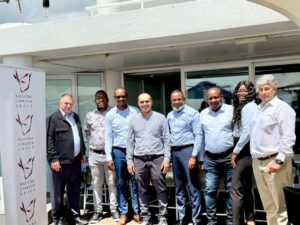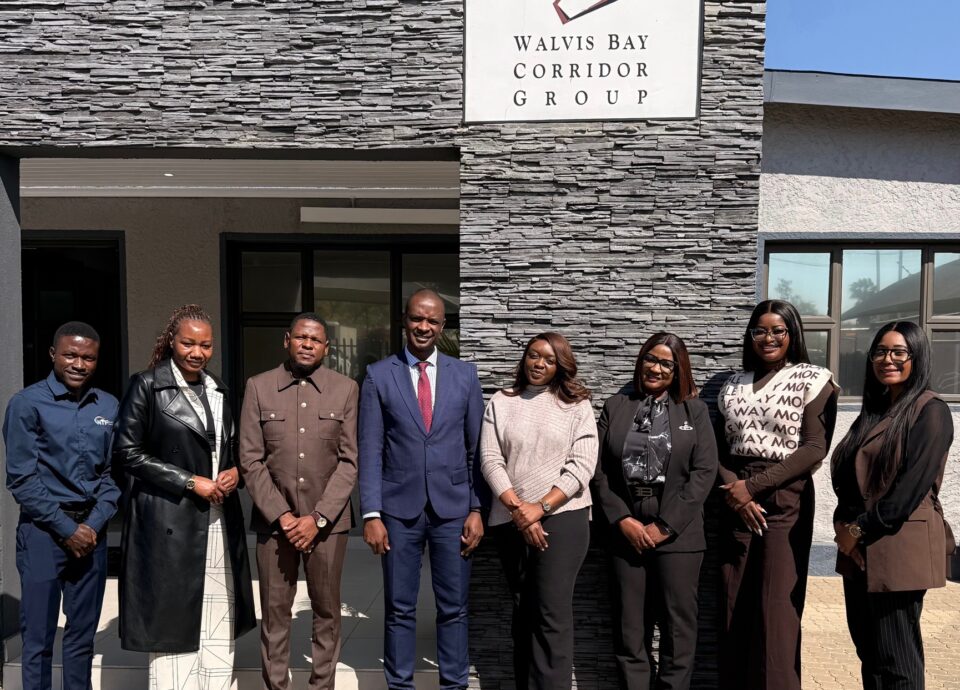


The Walvis Bay Corridor Group (WBCG) and the Namibian Ports Authority (Namport) participated in the Investing in African Mining Indaba, held in Cape Town, South Africa, from 08–13 February 2026. The attendance was aimed at positioning Namibia as a competitive, efficient, and reliable mining logistics partner within the SADC region and beyond. Furthermore, the delegation engaged in high-level discussions with leading global mining houses, commodity traders, and logistics investors, who expressed strong confidence in the strategic advantages offered by the corridors linking the Ports of Walvis Bay and Lüderitz.
Several firms indicated interest in establishing operational bases, warehousing facilities, and value-adding processing operations in Walvis Bay and Lüderitz. These developments are expected to accelerate corridor-based industrialisation, enhance Namibia’s logistics hub ambitions, stimulate local economic transformation, and drive growth across containerised, breakbulk, and bulk cargo segments.
Discussions further explored the expansion of commodity flows, including potential imports such as sulphur, fertiliser, ammonium nitrate, and clinker, alongside exports of nickel (both containerised and bulk), zinc, cobalt, manganese, copper, and iron ore. These engagements reaffirm Namibia’s growing stature as a preferred Atlantic gateway for mining logistics servicing Zambia, the DRC, Botswana, and the broader SADC hinterland.
The 2026 Mining Indaba has delivered significant strategic value, strengthening new and existing partnerships while unlocking new cargo pipelines and investment prospects essential to enhancing the competitiveness of Namibia’s ports and corridors.
Speaking at the “Invest in Namibia” session on the margins of the Indaba, Namibia’s Deputy Minister of Industries, Mines and Energy, Hon. Gaudentia Kröhne, underscored the strategic importance of the Walvis Bay Corridor Group in advancing regional trade and industrial development:
“Through the Walvis Bay Corridor Group, Namibia connects key regional corridors, including the Trans-Kalahari and Walvis Bay–Ndola–Lubumbashi Development Corridors, offering direct access to the Atlantic Ocean, reducing cargo transit times by days, and supporting heavy mineral logistics and bulk exports. This logistics advantage strengthens mineral beneficiation, regional value chains, and inclusive industrialisation.”
Representing WBCG, Acting Chief Executive Officer Mr. Edward Shivute highlighted the organisation’s commitment to ensuring that Namibia’s corridors remain efficient, predictable, and investment-ready:
“WBCG’s role extends beyond facilitation — we actively coordinate corridor stakeholders, address non-tariff barriers, improve border efficiency, and promote integrated logistics solutions that lower costs and transit times. As mining production expands across the region, Namibia stands ready to provide reliable port access, multimodal connectivity, and a supportive policy environment that enables volume growth and long-term industrial development.”
Mr. Shivute further emphasized that corridor competitiveness will increasingly be driven by efficiency upgrades, digitalization, harmonized border procedures, and strategic public-private partnerships, which are key focus areas under WBCG’s 2026–2031 strategic agenda.